

Sabine Andergassen: “Machine Learning Latent Orders from the Two-Particle Vertex”
Sabine Andergassen gives an invited talk in the Machine Learning session at OEPG-CMD 2026 in Graz.
On This Page
The OEPG-CMD Joint Meeting 2026 is the 75th Annual Meeting of the Austrian Physical Society (OEPG) together with the 32nd Meeting of the Condensed Matter Division (CMD) of the European Physical Society. It takes place from September 20 to 25, 2026 at the University of Graz.
Sabine Andergassen gives an invited talk in the Machine Learning session “M22 – Compressing complexity: machine learning in hard and soft condensed matter physics”.
Abstract
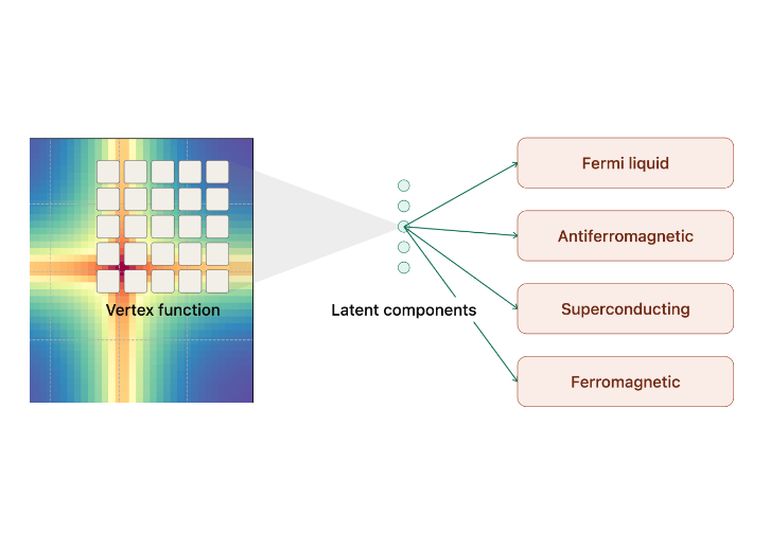
Machine Learning Latent Orders from the Two-Particle Vertex
Machine learning is becoming an integral part of condensed matter research, offering powerful new tools to model physical systems, uncover hidden patterns, and connect microscopic structure to macroscopic behavior. Focusing on physics-aware dimensionality reduction and data compression for quantum many-body systems, we aim to identify strategies for interpretable, transferable, and scalable modeling of materials. Specifically, we explore the ability of machine learning models to extract information encoded in the two-particle vertex that generalizes across different quantum phases.
About the Speaker
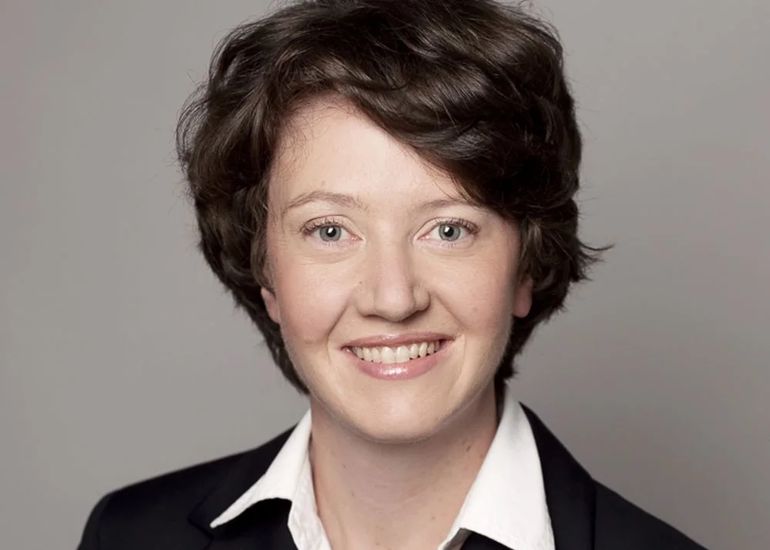
Prof. Dr. Sabine Andergassen is the head of the Research Group “Computational Quantum Science”, affiliated both with the Research Unit “Machine Learning” at the Faculty of Informatics as well as “Correlations: Theory and Experiments” at the Faculty of Physics.
Her main research focus is in the area of quantum many-body physics. In particular, she employs renormalization-group approaches to investigate the fundamental mechanisms underlying the physical behavior of model systems for materials, cold atomic gases and nanostructures. New perspectives on the high-dimensional data arising naturally in such complex interacting systems are revealed also by machine learning methods. At the same time, methods from statistical physics and quantum many-body theory can improve the understanding of the working principles of modern machine learning methods.
Sabine Andergassen is also Deputy Director of the iCAIML Doctoral College, the coordinator of the Quantum Physics Special Interest Group of CAIML, and the Vice Dean of Academic Affairs for the Master’s Programme Quantum Information Science and Technology.